
Why I Wanted to Build a Long Drive Driver
I’ve generally always been able to hit the driver a decent distance. Over the years, I’ve even won a few long drive contests at various golf outings. Combine that with doing a lot of driver and shaft testing, and it’s easy to see how this curiosity starts. Chasing peak numbers on a launch monitor often turns into swinging harder and harder, until those swings stop looking like golf swings and start resembling long drive swings. Somewhere along the way, I started wondering what swinging an actual long drive driver might look like for me if I built one.
Before anyone gets the wrong idea, I’m not claiming to be the longest hitter alive. Or that swinging like Kyle Berkshire or Bryson would ever work for me. I’m also fully aware I don’t compare to the Reddit or WRX golfer who claims to hit it 340 down the middle with a “smooth” swing. That said, I do have more speed than the average golfer, and enough of it to make an experiment like this interesting.
I’m fortunate to have built a network of contacts through years in “internet golf media”, but the ROI on this experiment wasn’t exactly high for anyone else. My “industry contacts” weren’t lining up to send long drive components just so I could swing hard for fun, and I wasn’t interested in spending serious money on something I wasn’t really training for.
With some guidance from trusted gear experts, a little help from ChatGPT, and a garage full of parts, I decided to piece together my own version of a long drive driver and finally address those intrusive driving range thoughts.
Gathering Parts and Putting It Together
A long drive driver is built to maximize clubhead speed above all else. True long drive competitors typically use club components designed specifically for that purpose. Shaft length is pushed to the extreme, profiles are incredibly stout, and lofts are really low. Forgiveness and consistency aren’t priorities. Most long drive driver builds push shaft length to 48+ inches, use lofts in the 4–7° range, and pair extremely stiff, lightweight shafts with light swingweights, often around D0–D2. When you try to build one using “regular” components, swingweight management quickly turns into a nightmare.

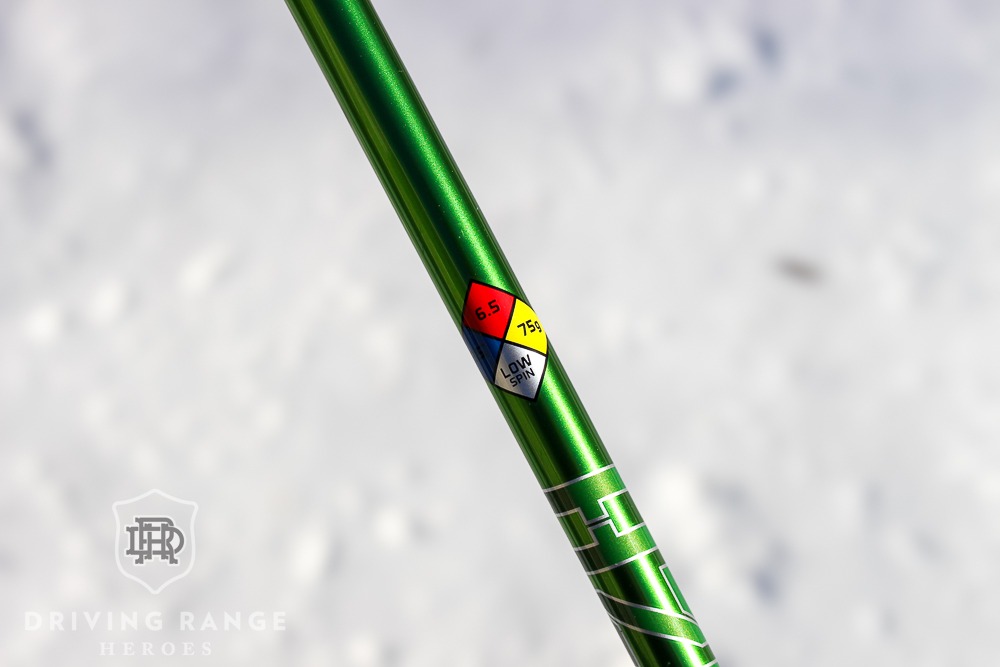
The first challenge was finding a shaft that made sense. It needed some weight in an extremely stout profile, and enough length. As many shafts as I have lying around, most would have required massive extensions to get anywhere close, and given the torque involved, that wasn’t a great idea. By sheer luck, I found an uncut 75x HZRDUS Smoke RDX Green in the stash. Even uncut, it only measured out to 47.5 inches, but I decided that was close enough for this experiment without going fully purpose-built.
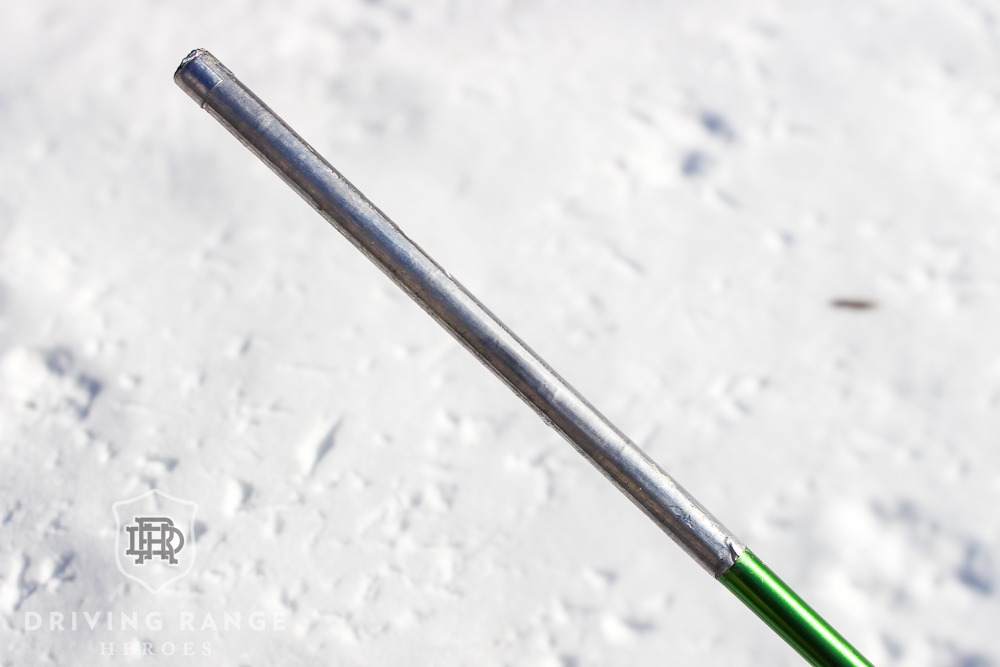
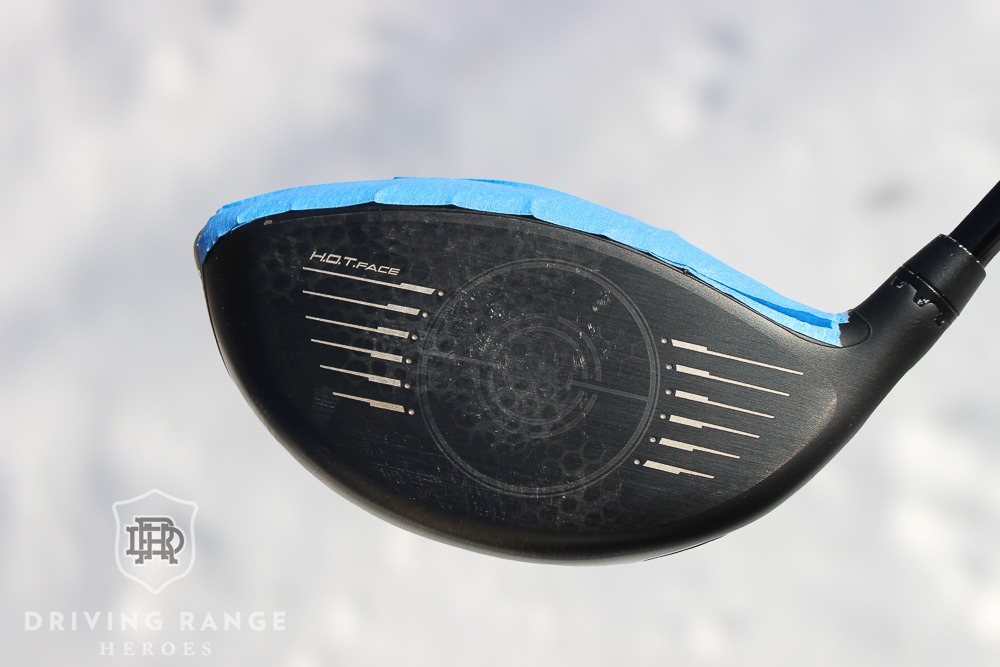
For the head, I went with my old Cobra Darkspeed LS. It’s a 9° head that can be adjusted down to 7.5°, opening the face slightly and allows me to push CG forward to help control spin at higher speeds. The problem? Swingweight. At first, it was an absurd E9. Long drive shafts are often heavily counterbalanced for this exact reason, but since mine wasn’t, I had to get creative. After some failed butt-weight attempts, I added roughly 38 grams of lead tape under the grip, which dropped the swingweight to around D4, and finished dialing it in with lighter sole weights to land near D2. With this makeshift/MacGyver build complete, this thing is one intimidating beast…

Taking My DIY Long Drive Driver to the Range
When I finished the build, this long drive driver was unlike anything I’d ever held. The overall weight was one thing, but the balance between the extreme length and the absurd amount of lead tape under the grip was truly wild. Leaned up next to my 45.25″ gamer, it made that club look borderline miniature. I understood the physics behind why this setup should create more speed, but holding it, I genuinely couldn’t believe I’d be able to swing it with any authority. It felt heavy, awkward, and completely unwieldy.
Knowing I’m not remotely trained to swing like an actual long drive athlete, I fully expected a disaster. Before heading to the dome, I added blue painter’s tape along the topline as a precaution. This turned out to be a very good decision.
Standing over a teed-up ball was completely different than waggle-testing it in the basement. How high do you tee it? Do you swing harder than normal? Do you try to imitate the exaggerated weight shift you see from guys like Kyle Berkshire? The first swing felt like some combination of swinging a telephone pole and a tether car. I tried to kill it and ended up with roughly the same club speed, a big slice, and terrible face contact.
On the second swing, I focused on cleaner contact instead of brute force. Of course, I immediately smashed the topline, launching the ball at 30º. Not great, but my club speed did tick up slightly.
As the session went on, I found something resembling familiarity. It never felt natural, but it became more manageable. In the end, I was swinging it about five miles per hour faster, but my contact was inconsistent. This kept ball speed gains limited. The best strikes were absolute bombs; they were just rare.
What I Learned From My Long Drive Driver Build
It didn’t take long to realize there’s a very real point of diminishing returns with a long drive driver. Swinging harder and finding the sweet spot rarely went hand in hand, let alone keeping a shot “in the grid.” (That’s what the long drivers say, right?) That wasn’t a shock. I never expected to tee this thing up and suddenly gain 100 yards. I don’t train for long drive, I don’t do it for a living, and I never use equipment anywhere near this extreme in normal play.
What this build really delivered was perspective. I wasn’t gaining much in measurable performance, but I gained a lot of respect for long drive competitors and just how specialized their gear and technique truly are. This setup was a fun experiment, but it was ultimately a Frankenstein of a beast built from spare parts, not made with purpose-built components for long drive.
The biggest takeaway for me is simple: at this club length, weight, balance, and familiarity matter more than raw power or swinging out of your shoes. To make a long drive driver work, I’d need far more time adapting to the length and something significantly lighter. For now, this one sticks around as a reminder that long drive is its own discipline, and one I’ll probably occasionally explore for the laughs.